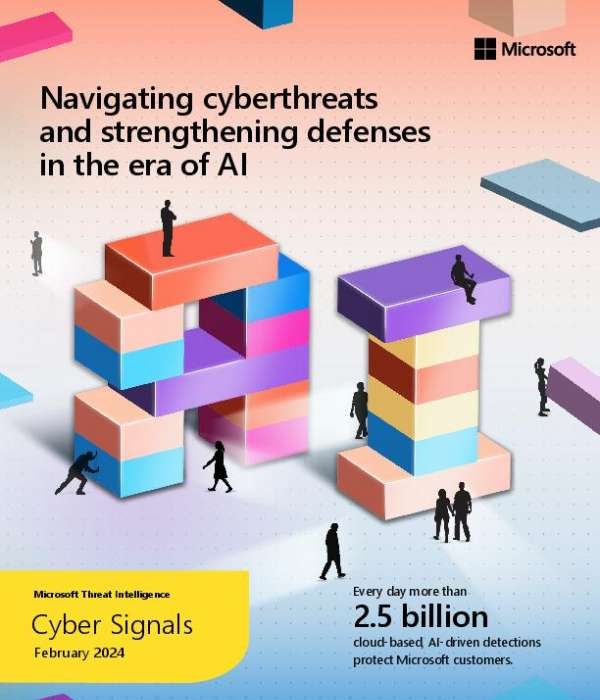
How is AI transforming cybersecurity?
AI is transforming cybersecurity by enhancing threat detection, incident response, and overall security measures. It empowers organizations to adapt to evolving threats, detect anomalies in real-time, and tailor defenses to specific organizational needs. Additionally, AI helps address the global cybersecurity workforce shortage by improving the productivity of security analysts, as evidenced by a study showing that users of Microsoft Copilot for Security were 44% more accurate and 26% faster in their tasks.
What challenges do cybercriminals pose with AI?
Cybercriminals are increasingly leveraging AI technologies, including large language models (LLMs), to improve their attack strategies. They use AI for tasks such as reconnaissance, coding, and social engineering, making their attacks more sophisticated and harder to detect. For example, threat actors have been observed using LLMs to generate phishing content and improve malware development, reflecting a shift towards more automated and effective cyberattacks.
What measures can organizations take to enhance security?
Organizations can enhance their cybersecurity posture by implementing several strategies, including enabling multifactor authentication (which reduces account takeover risk by over 99%), educating employees about social engineering tactics, and leveraging AI-driven security tools like Microsoft Copilot for Security. Additionally, adopting Zero Trust principles, applying conditional access policies, and maintaining robust data protection measures are crucial for defending against both traditional and AI-enabled cyber threats.
.png "QuattroOne")



 Sign in with LinkedIn